10 weirdest things forgotten in hotels

Who has not ever left something in a hotel? Everybody! Even if you look back you will always forget something like a mobile charger, toothbrush, pajamas, etc…

Travel insurance

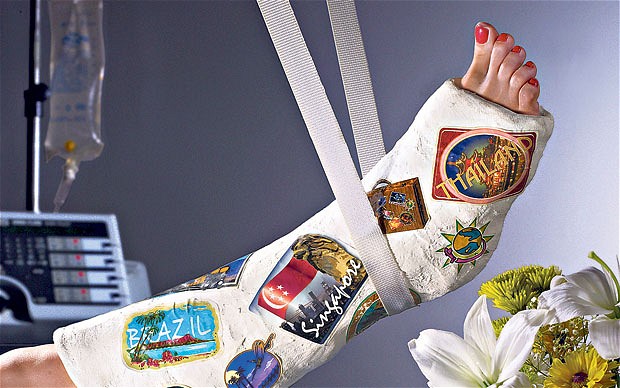
Often, when you book a trip, especially if it is short – you never think to take out travel insurance that covers medical expenses.

Awe-inspiring animal migrations that send people flocking

Animals migrate to breed, feed, mate, and various other essentials to survival

The 10 most popular islands in Europe

Here is a list with the 10 most popular European islands

The beauty of diving in Gran Canaria

ran Canaria has become one of the most requested and popular holiday destinations for diving

Labels

Showing posts with label Tips. Show all posts

Thursday, August 22, 2013

Travel insurance

Travel insurance


Often, when you book a trip, especially if it is short – you never think to take out travel insurance that covers medical expenses. If the trip is organized by an agency, almost always, insurance is included in the complete package and you pay without even noticing. Until some time ago I must admit that even I had not ever thought about it, everything changed when I started to travel more abroad and especially when I went to Cuba, where health insurance is mandatory in order to enter the country.
Travel insurance
Travel insurance
When you leave, you are happy, full of beautiful energy and positive thoughts and you always think that you are on vacation, so what can happen? But unfortunately, as we all know, Murphy is always around the corner and just fantastic during our long journey that is expected to visit us by bringing some nasty surprise.
It can happen that your luggage does not arrive at your destination right away and have to wait days, or that your plane faces long delays or is even erased, or even worse could happen that you become ill. I know I may seem like the bird of ill omen at this time, but alas they are all things that can happen and that as they say prevention is better than cure. There are countries, such as Japan or the United States, where medical costs are really high and if you were to serve a medical consultation without insurance you can be sure that this would make you regret even the day you started.
But what insurance should do? The first thing to consider is how many trips you plan to do in a year and where. If you are the great traveller who loves to travel the world then you might consider the possibility of making the world” annual formula which pretty much covers you in any country you decide to go.
Obviously, this type of policy makes sense if you organize your trips on your own without resorting a travel agency. Then, there is the domestic travel insurance and the temporary ones that are essentially valid for the entire duration of the trip. With the temporary you must be careful because they are not always the cheapest ones.
For example, this year I have two great trips to do in India (where I am right now) and Japan, and I saw that making two separate insurances would have make me pay a lot more compared to the year which that I’ve done.
The last important thing to see is which insurance covers  flight delays, baggage loss, all types of medical spending as a hospital and medicines, etc etc.
source http://tripandtravelblog.com

Thursday, June 20, 2013

Wertravel Top 7 Honeymoon Tips

Honeymoons 

It’s the holiday of a lifetime, so your honeymoon needs to be perfect from start to finish. To help make sure it all goes smoothly, here are our some honeymoon tips.

1. Don’t hang about
Book early to avoid disappointment. As soon as you’ve set a wedding date, start thinking about honeymoon destinations, especially if you’re getting married at a peak time. You can make a saving with our early booking discounts.
2. Choose a date
The month you’re getting married may not be the best time to visit your chosen honeymoon destination. Check our Destination Calendar or ask  Travel Experts the best time of year to go. If your heart’s set on a specific country, you may have to plan your wedding around your honeymoon.
3. Look out for offers
 You can enjoy extras such as fruit and flowers in your room on arrival, candlelit dinners and room upgrades, complimentary massages or even huge discounts.
4. Coordinate departure days
Some destinations can only be reached on certain days due to airline schedules, so you may need to be flexible – especially if you want to travel the day after your wedding. Look for places where the days of departure to fit into your schedule.
5. Use the right name
If you’re going to change your passport into your married name, make sure all documents and booking details are in the same name, or you could be refused entry into the country. Also allow plenty of time to send off all the documents – and for them to be returned.
6. Buy travel insurance
This is a must when travelling overseas as it covers you if you’re ill or there’s an accident. Make sure your policy also covers the value of your engagement and wedding rings if you take them with you.
7. Relax and enjoyThe most important tip of all!

Friday, February 15, 2013

Travel Tips Join Travel Forums

Join Travel Forums

dek
Years ago, travel forums — in which users answer other users' questions — were hit or miss, with too many crackpots dominating the conversation. Certain forums, however, have matured to the point that you'd be unwise to ignore them. Forums like those on TripAdvisor.com, Fodors.com, Frommers.com and LonelyPlanet.com all handle destination advice well. But bear in mind that sites attract different kinds of travelers: Fodors users can skew older and wealthier, for example, while the Lonely Planet fan is typically younger and more likely to rough it.
Also check out CruiseCritic.com for a cruise lowdown, FlyerTalk.com for air travel, Chowhound.com and Roadfood.com for dining and Superfuture.com for a little bit of everything, especially cutting-edge design and shopping.

source Time

Travel Tips Read Traveler Reviews!!

Read Traveler Reviews


dek
User-review sites have changed the way most people plan their travel, giving us an enormously useful tool for evaluating hotels, restaurants, tourist attractions and the like. TripAdvisor.com is the big kahuna, with more than 20 million reviews, mostly of hotels — but also less traditional lodging like B&Bs, villas and private homes — as well as restaurants and attractions. TravelPost.com is another, owned by Kayak.com and recently relaunched; like its airfare-aggregating parent, TravelPost.com collects reviews from various websites, such as Citysearch.com, Yahoo! Travel and IgoUgo.com. Check out Yelp.com for locals' takes on restaurants, shops and other businesses, or OpenTable.com, which guarantees that reviewers have actually eaten at the restaurants they rate.
User reviews are helpful but not foolproof, so keep in mind the following tips:
• Read between the lines, asking yourself if the writer shares your mind-set, or if a negative review is the result of a persnickety traveler or a singular bad experience. As a rule of thumb, the more people have contributed, the more valuable overall ratings become.
• Always see how recent the post was. Establishments are quick to change, move or close.
• Always look at photos posted by users; you may find them more telling than words could ever hope to be.

source Time

Monday, January 28, 2013

Tips How to Eat Cheap Around the World


Street Food Asia
By Olsi10
  In fact, eating is one of  favorite activities, and also one of  favorite aspects of traveling.
Food is such an integral part of so many cultures that to skip out on meals when you travel is to miss a huge part of traveling. I’m always disappointed when I listen travelers who cook all their meals in a hostel kitchen. Why come to Italy and not have pasta? No sushi in Japan?No souvlaki in Greece? Avoiding steak in Argentina? Skipping paella in Spain? You’re crazy.
But many travelers have a valid concern when it comes to food — eating out all the time is expensive.  Imagine if you eat out every day — your food budget would be astronomical.

10 Commandments
1 Super Market
2 Self service
3 No trade names
4 Fast Food
5 Buffets
6 Street Markets
7 Offers
8 Bakeries
9 By snaks before travel
10 Delivery
 

   Cheap Places to Eat

Bakery-A bakery  produces and sells flour-based food baked in an oven such as bread, cakes, pastries, and pies.Some retail bakeries are also cafés, serving coffee and tea to customers who wish to consume the baked goods on the premises.Is greatest food and the most important is cheap. 

Buffets – While they don’t always serve the best meals, buffets offer great value for your money, especially since they are all-you-can-eat. You can fill up on one meal for the entire day.  Buffets are a good economical choice, and give you the most food for your buck. They typically cost around $15 USD.
Outdoor Vendors – Small stands that sell hot dogs, sausages, sandwiches, and the like are great places to get a cheap and quick meal.  These quick and inexpensive meals won’t win any Michelin stars, but they will keep you full without emptying your wallet.
Street Food – In most places around the world, the streets are lined with little food stalls and areas where food is cooked openly on the street. You grab a plate, sit down in a little plastic chair, and enjoy a delicious meal. Street food is some of the best food in the world. Meals at street stalls (different from street vendors, who have a bit more permanent set up) cost less than a dollar most of the time, and are a great way to really experience the local cuisine. Many places — like Thailand, for example — wouldn’t be the same if the street food disappeared.
cooking in a hostelFast Food – Fast food isn’t the best for you, but it is another option if you want a cheap meal in expensive parts of the world. For only about 5 dollars (more in expensive countries like Norway, home of the 15 dollar Whopper), you can get a filling (and hugely caloric) meal. Moreover, the local dollar menu will save you even more. Sure, it’s not the greatest food .(However, note, in Asia fast food is actually more expensive than the local food.)
Go Local – . We live in a globalized world — eat what you want. However, the non-local food is almost always more expensive than the local cuisine. For example, in Greece a gyro is 2.20 Euro, but a pizza is 6 Euros. In Vietnam, a bowl of pho is less than a dollar but a burger is about 3 times as much. Go local and you will save.

Other Ways to Save

Lunch Specials – Many restaurants, especially in Europe, offer lunch specials where items on the dinner menu are offered at a huge discount. You can get an amazing afternoon meal for a fraction of the cost you’d pay for the same meal in the evening. I usually tend to eat my “nice” meal during lunch because lunch specials and plates of the day are about 30-40% off what I might pay at dinner.
Self Service-Take away some restaraunts have 2 prices for the same plate 1 most expensive if you seed their  and 1 cheap if you take away.
Delivery is one other way to eat good and to save your money in many countries is one very good choice.
No Soda – I may splurge once in a while on a Coke, but I hardly ever buy soda because it is so expensive. At $2 dollars a pop, two or three a day can really add up over the course of a long-term trip.
Refill Water Bottles – Water might not be as expensive as soda, but buying a bottle or three a day can add up. As you walk around and sightsee, you need to stay hydrated. But buying a bottle of water is not only environmentally wasteful — it also makes foolish budget travel sense. Assuming each bottle is about 75 cents and you buy 3 a day, over the course of a month you well spend $67.50! That’s a lot of money spent on water. (Plus, in some parts of the world, bottled water costs a lot more than that!) Carry a refillable bottle of water with you instead and just use the tap water.
Fruit Market Italy
Don’t Snack – A gelato here, a gelato there. A soda. A candy bar. An ice cream. A small pastry. It all adds up. Since the price is so small (“it’s only a Euro!”), we don’t think of snacking as having a big impact on our budget. But buying snacks a few times a day will slowly add up and throw your budget out of whack. It’s not something many travelers think of but snacking really does add up over the long term. Avoid snacks and stick to big, filling meals instead.
Cooking – Cooking is one of the best ways to keep your travel costs down, and supermarkets are also great places to go to see what the local people eat. The only place where cooking your own meals isn’t the most economical option is Asia, where the street food is usually cheaper.
Picnic – Another good self-cook method is to picnic. This is something I do a lot for lunch. I usually head to a local food market, pick up a bunch of food, and go picnic in the park. Not only you are saving money , but it affords you a good chance to watch the locals scurry about their daily lives.
Tourism Cards – Most people think of tourist cards like the iAmsterdam card or the VisitOslo pass as just a way to save money on transportation and attractions. But these cards also offer discounts at many restaurants. Typically, discounts are around 15-25%, but sometimes lunch specials can be up to 50% off.
 But by using the tips above, I can afford to keep my costs down while still being able to afford a quality meal every so often.
And that’s what is really important — finding the right balance between cheap (maybe unappealing) meals and really nice dinners. Your wallet and your stomach will thank you.